For nearly a decade, Instagram has been the undisputed champion of visual advertising.
For eCommerce, fashion, beauty, and lifestyle brands, it’s a non-negotiable part of the marketing mix.
But as we navigate late 2026, many seasoned advertisers are feeling the strain. It’s not just your imagination: ad costs on Meta platforms are steadily rising as competition for the same audience intensifies.
Get Free TikTok Ad Credit Up to $6000 [Limited Time Offer]
Beyond rising CPMs, you’re fighting ad fatigue, algorithm changes, and the strategic risk of building your entire customer acquisition model within one company’s walled garden (Meta).
A 2026 marketer survey revealed that over 58% of brands are actively seeking to diversify their social ad spend to reduce this dependency and find new, untapped audiences.
Your customers are not just on one platform, so your ads shouldn’t be either.
The good news is that the alternatives have never been more powerful.
This guide will explore the top 7 Instagram Ads alternatives, each offering a unique audience, a different user mindset, and a proven ability to convert.

What are the best Instagram Ads alternatives?
The best Instagram Ads alternatives for 2026 depend on your goal.
For visual-first eCommerce, the top alternatives are TikTok Ads (for short-form video discovery) and Pinterest Ads (for long-term purchase planning).
For high-intent eCommerce sales, Google Performance Max is a powerful data-driven choice. For B2B businesses, LinkedIn Ads is the clear-cut winner.
Which platform is better than Instagram for ads in 2026?
Better is relative to your objective.
For B2C product discovery and reaching Gen Z, TikTok is arguably better due to its shoppertainment culture and powerful content-first algorithm.

For B2B lead generation, LinkedIn is definitely better, offering precise targeting by job title and company size that Instagram’s interest targeting cannot match.
For capturing active purchase intent, Google Ads and Amazon Ads are better, as they target users who are already searching for your product.
Why You Need to Diversify Beyond Instagram
Relying solely on Instagram in 2026 is a high-risk strategy. The platform is powerful, but it has distinct challenges:
Intense Visual Competition:
You aren’t just competing with other ads; you’re competing with a perfectly curated feed of high-production content from creators, friends, and other brands in your niche (fashion, beauty, home, etc.).
Passive Interruption Marketing:
Like Facebook, Instagram ads must interrupt a user’s social scrolling.
This is a very different user mindset than someone actively searching for a solution on Google or planning a purchase on Pinterest.
Audience Saturation:
You may be paying more and more to show your ad to the same people who have already seen it and scrolled past.
By diversifying, you gain access to new audiences, lower-cost ad auctions, and, most importantly, users who are in a completely different, and sometimes better, frame of mind to convert.
7 Top Instagram Ads Alternatives for 2026
1. TikTok Ads
A short-form video discovery engine that has evolved into a global eCommerce powerhouse.
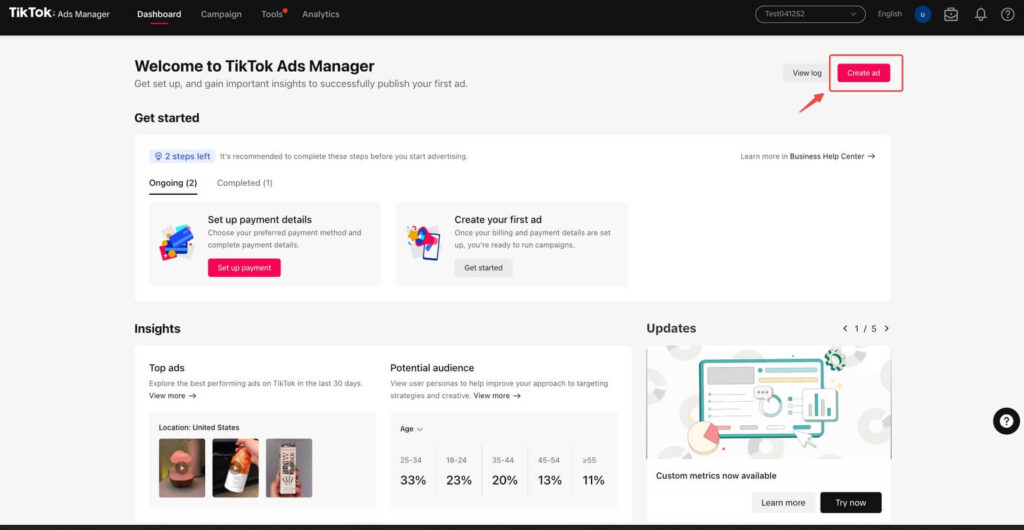
Its algorithm is famously powerful, and its ad formats (In-Feed, Spark Ads, Video Shopping Ads) are built to blend seamlessly with organic, user-generated content (UGC).
Pros:
- Massive eCommerce Intent: The #TikTokMadeMeBuyIt trend is a core part of the culture. Users are primed to discover and buy products.
- Authenticity Wins: Unlike Instagram’s polished aesthetic, lo-fi and authentic UGC-style ads often perform best, which can be cheaper to produce.
- Seamless Checkout: TikTok Shop creates a frictionless in-app purchasing experience, dramatically boosting conversion rates.
Cons:
- High Creative Burnout: Trends move at lightning speed. An ad creative that works one week may be cringey the next. It requires a constant pipeline of new content.
- Audience Skew: While its audience is aging up, its core strength is still the 18-34 demographic, which may not fit every brand.
Actionable Insight:
Use Spark Ads to amplify content from creators who have already reviewed your product.
This whitelisting approach uses a trusted voice, bypasses ad fatigue, and builds social proof far more effectively than a standard branded ad.
2. Pinterest Ads
A visual search engine where users (Pinners) go to find inspiration, discover new ideas, and actively plan future purchases for everything from recipes and outfits to home renovations and weddings.

Pros:
- Powerful Planning Mindset: You reach users in the consideration phase, not the scrolling phase. 85% of weekly Pinners have made a purchase based on Pins.
- Long Ad Lifespan: A Promoted Pin can be saved to a user’s board and continue to drive traffic and sales for months or even years, unlike an Instagram ad that’s gone in 48 hours.
- High-Value Audience: The Pinterest audience often has a higher-than-average household income and purchase intent.
Cons:
- Not ideal for B2B services or non-visual products.
- The user base is still predominantly female, though this is changing.
Actionable Insight:
Don’t just pin your product shot. Create a story pin or idea pin that solves a problem.
Instead of an ad for a Blue Sofa, run an ad titled 5 Ways to Style a Blue Sofa for a Small Living Room. You’re advertising a solution, not just an item.
Want to grow faster on Pinterest? Start with these must-read articles:
👉Pinterest Algorithm Explained: How It Works
👉How to Rank Pins on Pinterest
3. Google Performance Max (P-Max)
Google’s AI-driven, all-in-one campaign type.
You provide your creative assets (images, videos, headlines, product feed), and its machine learning automatically serves ads across Google’s entire ecosystem, Search, Shopping, YouTube, Display, Gmail, and Discover.

Pros:
- Captures Active Intent: This is the key difference from Instagram. P-Max finds users who are actively searching for your products on Google, which is the highest-intent signal.
- Total Funnel Coverage: It finds new customers on YouTube and Display (like Instagram) and converts them on Search and Shopping (unlike Instagram).
- Built for eCommerce: It’s designed to optimize for one goal: eCommerce sales (ROAS) from your product catalog.
Cons:
- It’s a black box. You have very little manual control over where your budget goes or which audience segments perform best.
- It requires a high degree of trust in Google’s AI and needs a steady flow of conversion data to learn effectively.
Actionable Insight:
Feed P-Max with your best-performing vertical video assets from your Instagram Reels.
This gives the AI high-quality creative to use on YouTube Shorts, an inventory source many of your competitors are neglecting in their P-Max campaigns.
Business Growth Tools & Exclusive Resources You Shouldn’t Miss
| 🎞️ Pippit AI – Free AI Video Generator – Perfect for Reels, Shorts, and TikTok. Zero editing skills needed. | 👉 Generate Videos with AI |
| 🛒 Build Your Store on Shopify – Start completely free, then just $1/month for 3 months. | 👉 Launch Your Store Today |
4. LinkedIn Ads
The definitive professional network, now a content and ads platform focused entirely on B2B interactions, career development, and industry news.

Pros:
- Unmatched B2B Targeting: This is its superpower. You can target users by Job Title, Company Name, Seniority, and Industry. This is impossible on Instagram.
- High-Value Leads: The Cost Per Lead (CPL) is much higher, but the quality of that lead (e.g., a Director of Marketing vs. a Marketing_Hustle_88 profile) is exponentially better.
Cons:
- Extremely expensive for B2C or non-professional products.
- The creative environment is formal and value-driven; flashy ad content fails.
Actionable Insight:
Use LinkedIn Document Ads. Instead of linking to a landing page, you can upload a PDF (like a case study or whitepaper) that users can read and download directly from their feed.
It’s the B2B equivalent of an Instagram infographic carousel but captures a high-quality lead in the process.
Here are a few great reads to help you get even better at LinkedIn:
👉 How to Build a LinkedIn Marketing Strategy That Drives Real Results
👉 How to Use LinkedIn for Social Media Marketing
5. Amazon Advertising
The ad platform inside the world’s largest eCommerce store.
It lets you pay to promote your products at the top of search results (Sponsored Products) and in video slots (Sponsored Brands Video) on Amazon.

Pros:
- Highest Possible Purchase Intent: You are reaching users who are literally on Amazon.com with their credit card saved, actively searching for a product to buy.
- Massive Conversion Rates: Because of this intent, conversion rates on Amazon Ads (often 10-15%) dwarf those of any social media platform.
- Defensive & Offensive: You can place ads on your own product pages to defend against competitors and on competitors’ pages to steal sales.
Cons:
- Only for eCommerce brands that sell on Amazon.
- You are building Amazon’s customer list, not your own.
Actionable Insight: Use Sponsored Brands Video. Take your best-performing 15-second Instagram video, make it product-focused, and run it on Amazon.
It will stand out visually on a search results page full of static product images, dramatically increasing your click-through rate.
6. Reddit Ads
A vast collection of highly specific, passionate communities (subreddits). Its ad platform allows you to place ads directly into these niche forums.

Pros:
- Hyper-Niche Targeting: This is its unique strength. You can target the 100,000+ active communities. Want to sell to PC builders? Target r/buildapc.
- Low Cost: Because it’s less saturated, CPCs and CPMs can be significantly cheaper than on Meta for the same audience.
- High-Trust Environment: Redditors are skeptical of ads but deeply trust peer recommendations. An ad that speaks their language is highly effective.
Cons:
- Users are notoriously ad-averse. Your creative must be authentic and non-corporate. A bad ad will get called out in the comments.
Actionable Insight:
Spend 80% of your time on the headline and comments.
Your ad headline should feel like a real Reddit post (e.g., A heads-up for my fellow r/hiking members, we’re running 20% off our waterproof gear).
Then, be the first to post a comment to provide more detail and engage with other users.
7. Native Advertising (Taboola & Outbrain)
Platform Description: These platforms place your ads, disguised as sponsored articles, at the bottom of major news and media sites (like ESPN, USA Today, etc.).
Best For: Content-heavy businesses, lead magnets, and high-consideration products that require education.
Why It’s a Smart Alternative:
- Captures a Reading Mindset: You reach users when they are in a research and discovery mode, not a social mode.
- Cost-Effective Top-of-Funnel: It’s a powerful way to fill the top of your marketing funnel, often at a lower cost-per-click than Instagram.
- Bypasses Ad Blindness: Because native ads look like editorial content (From Around the Web), they often get clicks from users who would normally ignore polished visual ads.
Key Differentiator: You are using content as the ad. This is perfect for complex products (like finance or tech) that can’t be explained in a 15-second Reel.
More useful article for you:
👉TikTok Ad Credit: Unlock Up to $6000 in FREE Ads
👉Top 10 Facebook Ads Alternatives: Platforms That Actually Convert
👉7 Best Google Ads Alternatives: Smarter & Cheaper Ways to Get Clicks
Conclusion
Instagram remains a powerful tool in your advertising arsenal, but it should no longer be the only one.
The rising costs and intense visual competition in 2026 make a diversified ad strategy essential for survival and growth.
The key is to match your message to the user’s mindset. Stop trying to make one ad fit all platforms. Instead, use TikTok to create new, viral demand.
Use Google and Amazon to capture active, high-intent buyers. Use Pinterest to get in front of future planners.
And use LinkedIn to find the high-value professional leads that Instagram will never be able to reach.
Start by choosing just one or two of these alternatives that best fit your product and goals.
You’ll not only build a more resilient advertising strategy but will likely discover new, profitable audiences that have been waiting for you.